
The Artemis II Project
NASA Strengthens Artemis: Refining the Mission
Source: Nasa Article
Independent creative exploration
I wanted to explore what could happen when a dense, factual space story is treated as the starting point for a piece of visual storytelling rather than simply presented as information. Using a NASA article outlining updates to the Artemis mission architecture, I developed a short-form cinematic concept as a personal creative experiment.
The project began with the article itself — extracting the key narrative and turning the information into a story that could be understood quickly through image, pacing, voice and sound. From there I developed the script, visual direction and individual scenes, using Magnific Workflow and a range of AI tools to build the imagery before bringing everything together in motion.
Concept Development • Art Direction & Visual Style • AI Visual Development — Magnific Workflow • Story & Script Development • Scene Development & Storyboarding • Motion & Image-to-Video Development • Voice Over Development • SFX & Music Development • Final Edit & Post Production — Premiere Pro
The challenge
The source material was a technical update to the Artemis mission architecture. The challenge was to distil that information into a concise, accessible and visually engaging story while retaining the core narrative.
As a self-initiated project, it also became an opportunity to explore how far a single article could be taken — from an initial idea through to a complete audiovisual piece.
The Creative
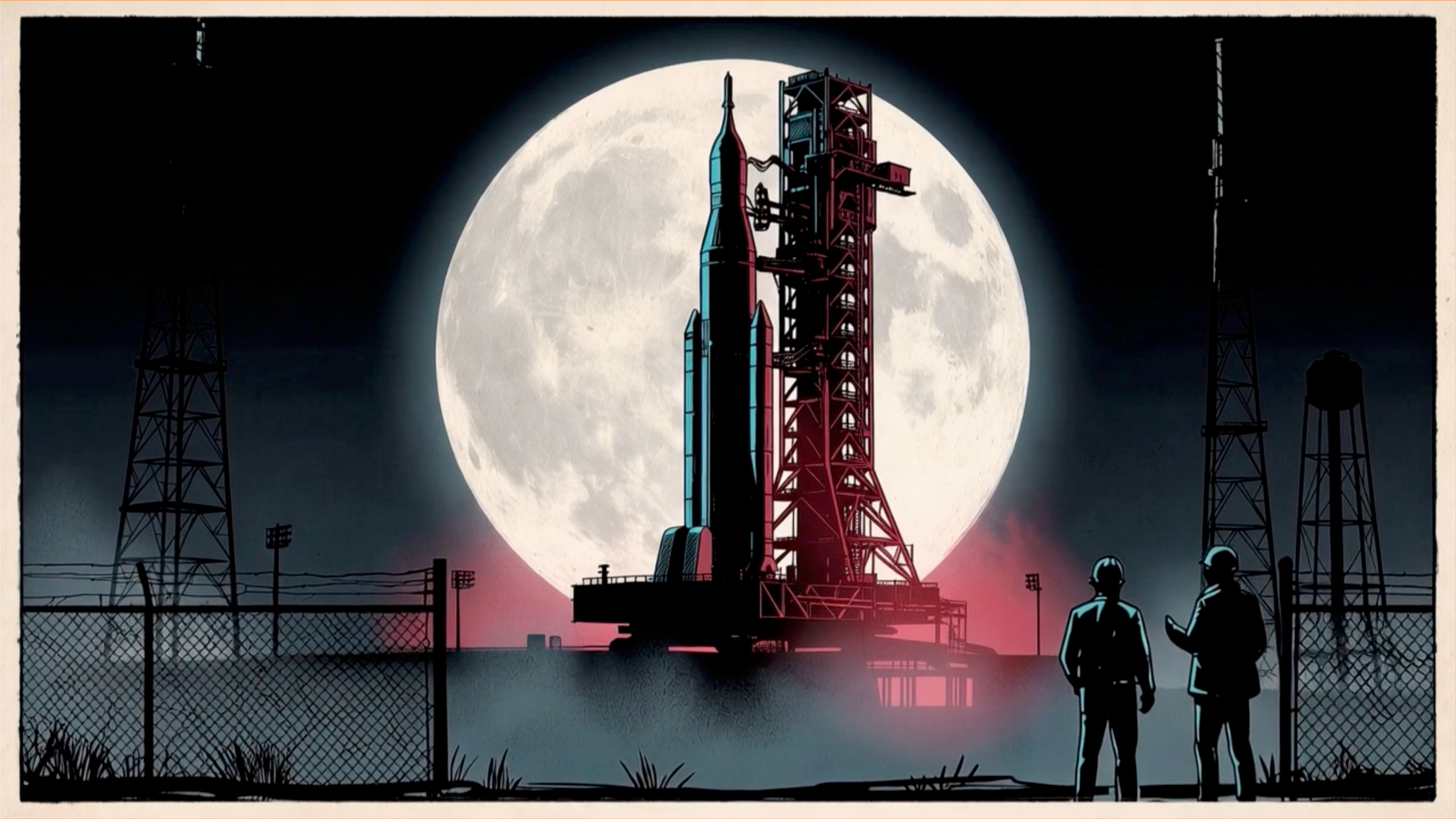
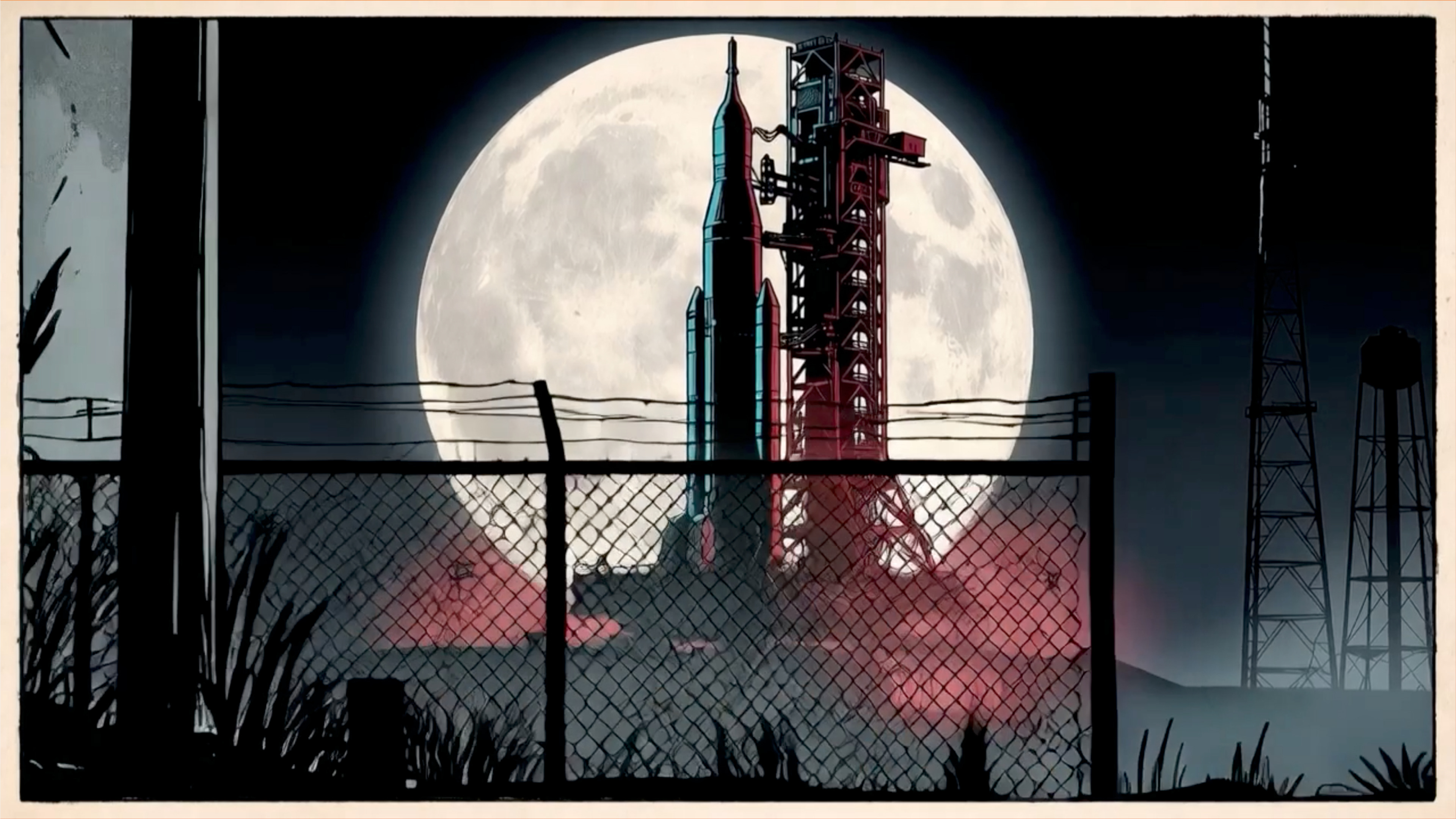
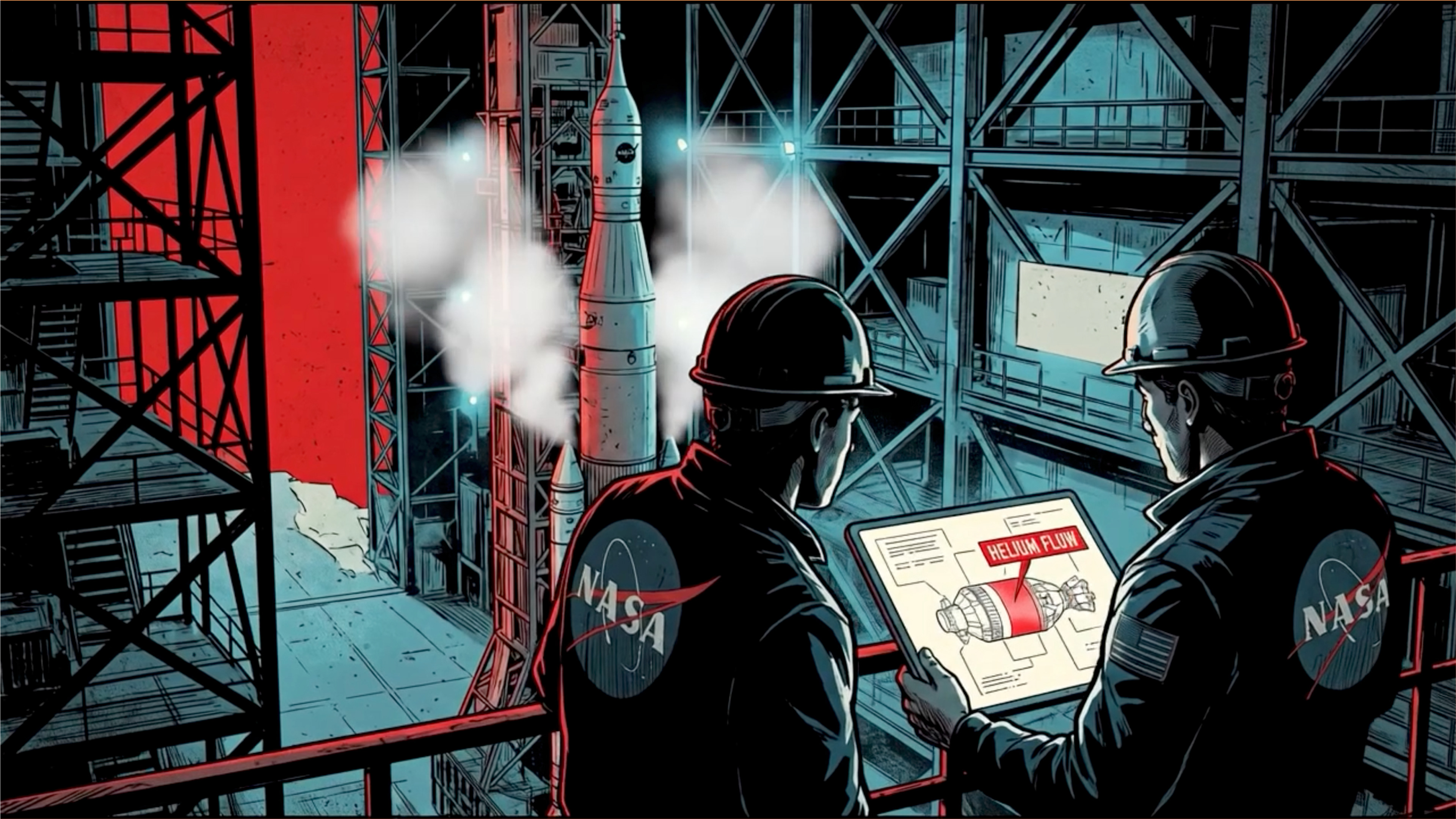
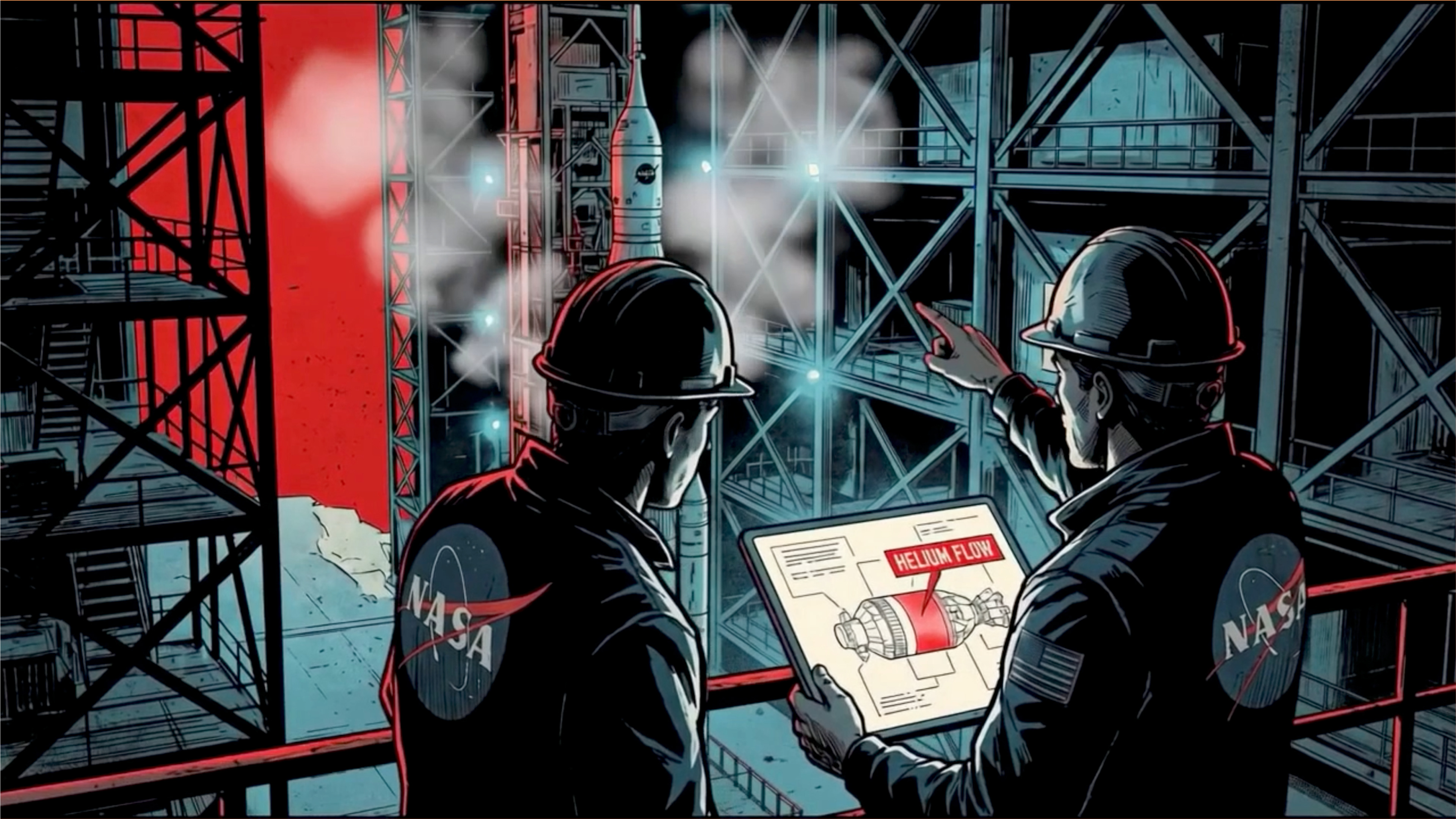
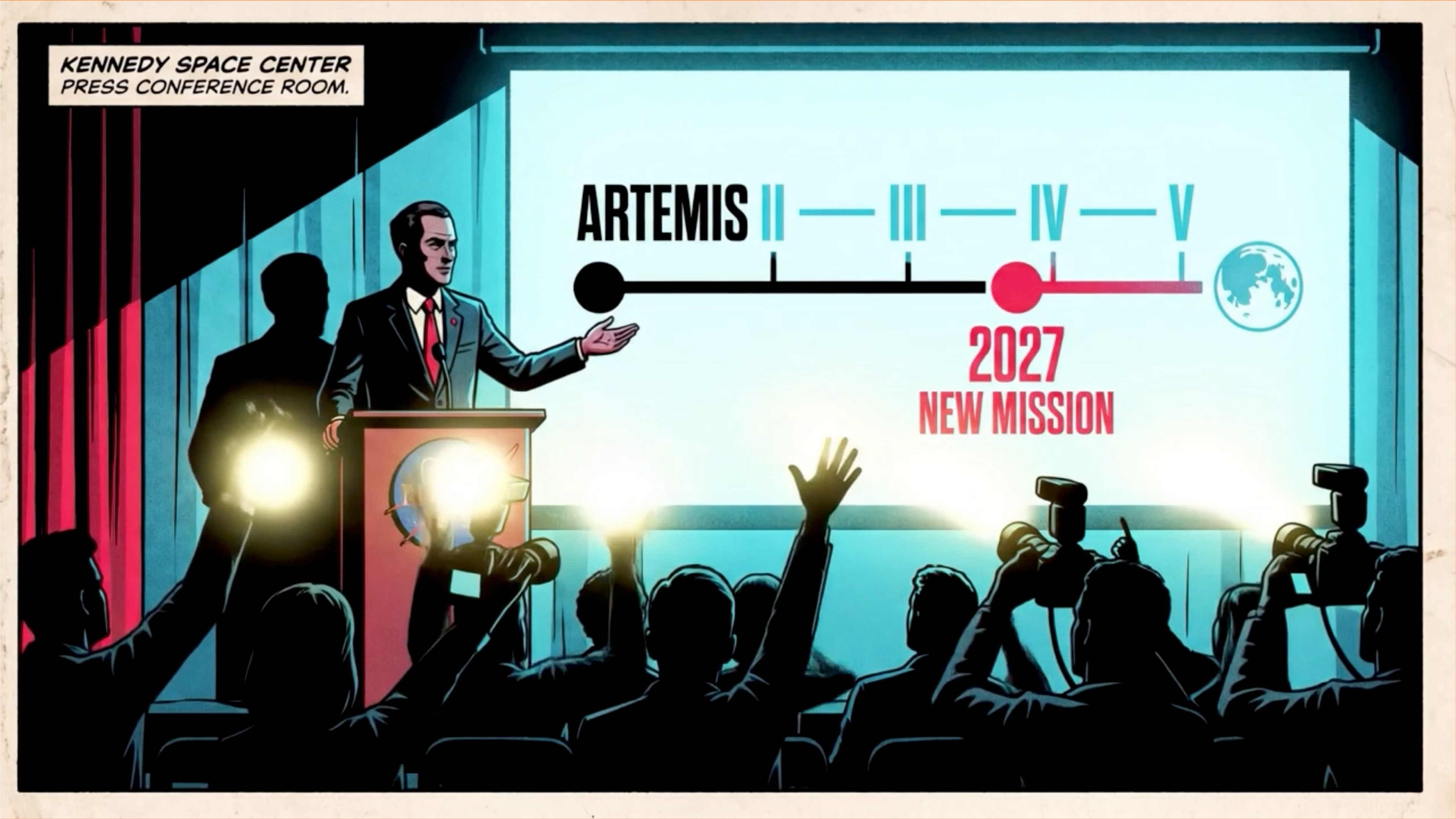
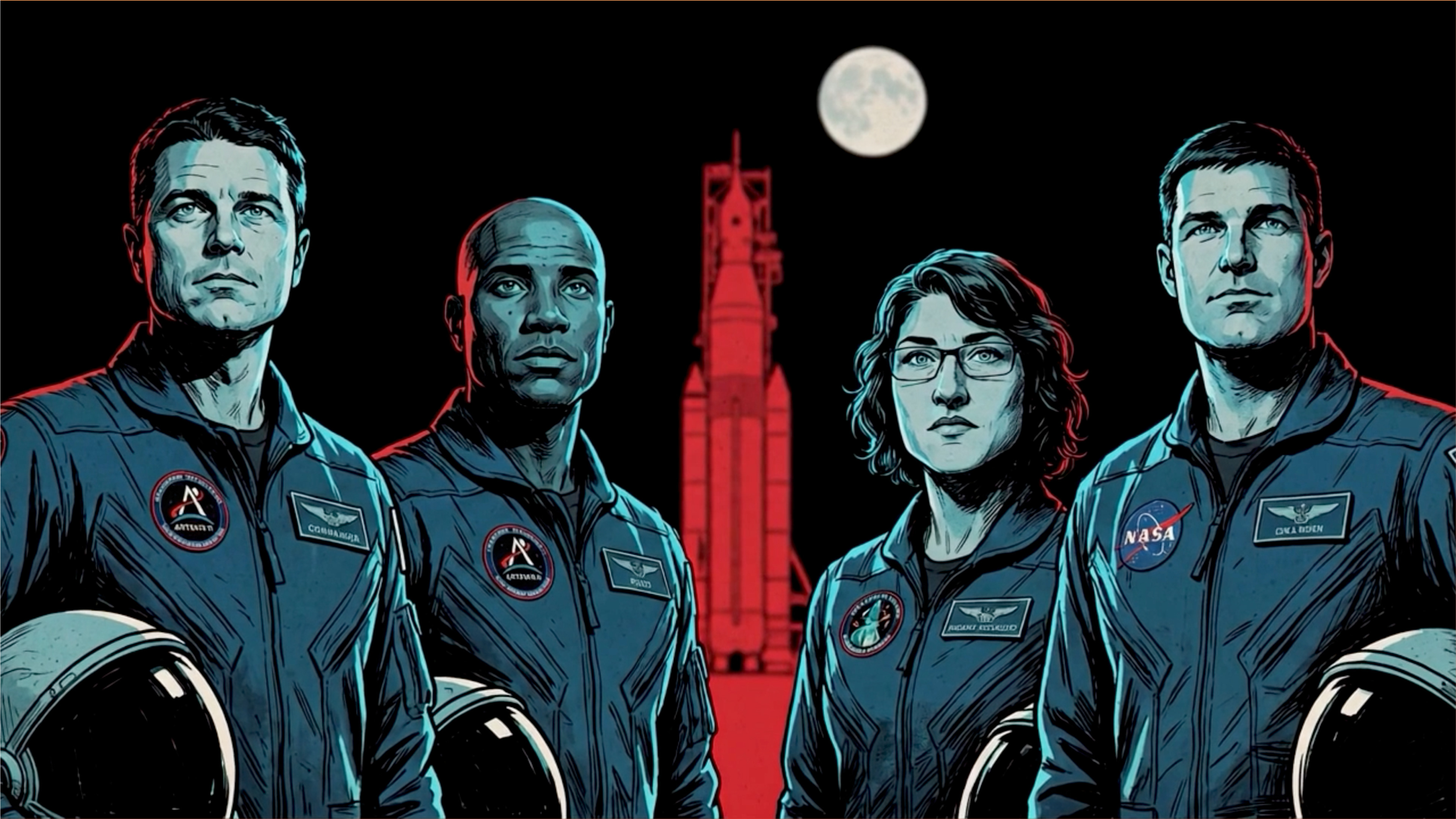
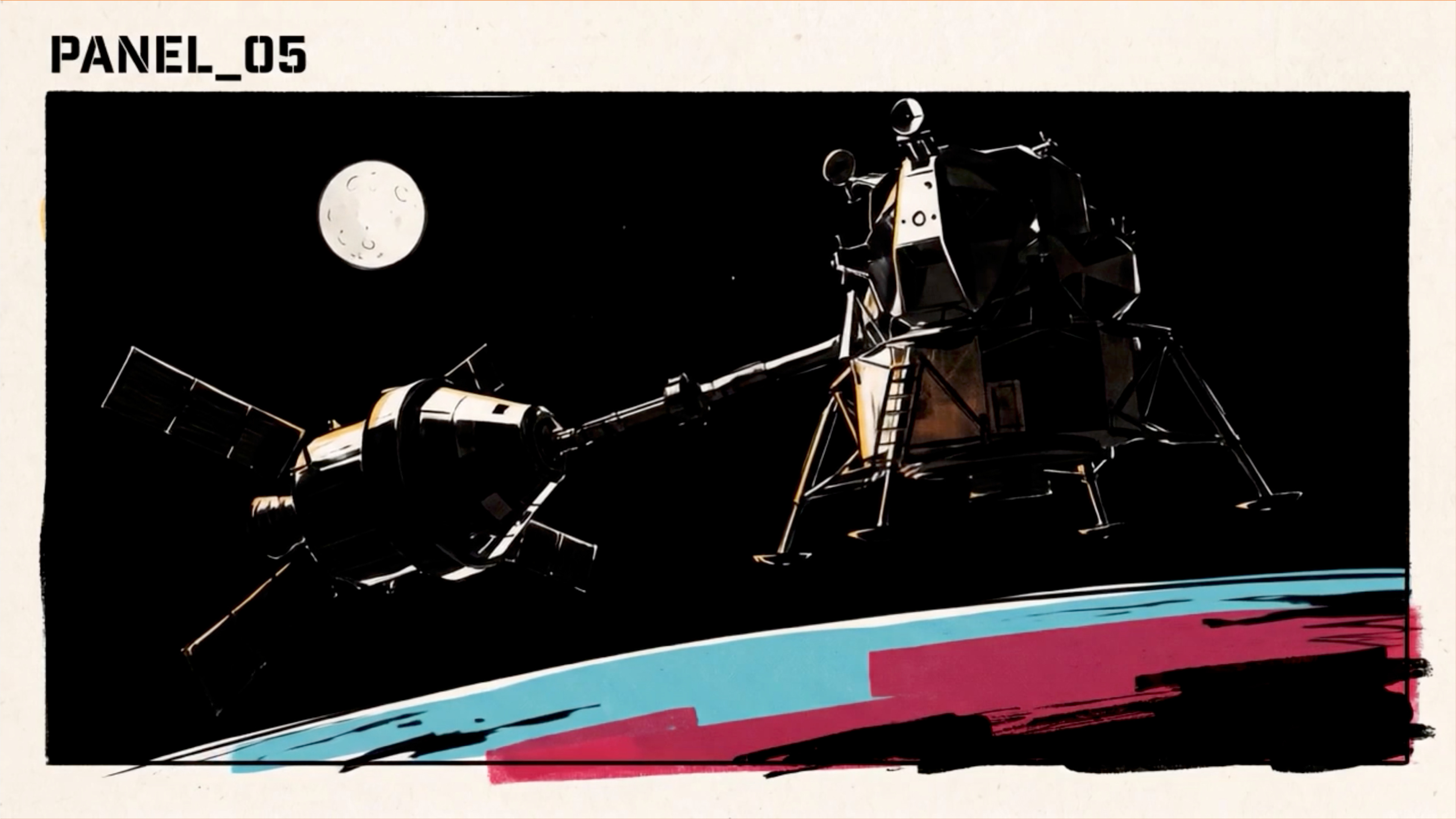
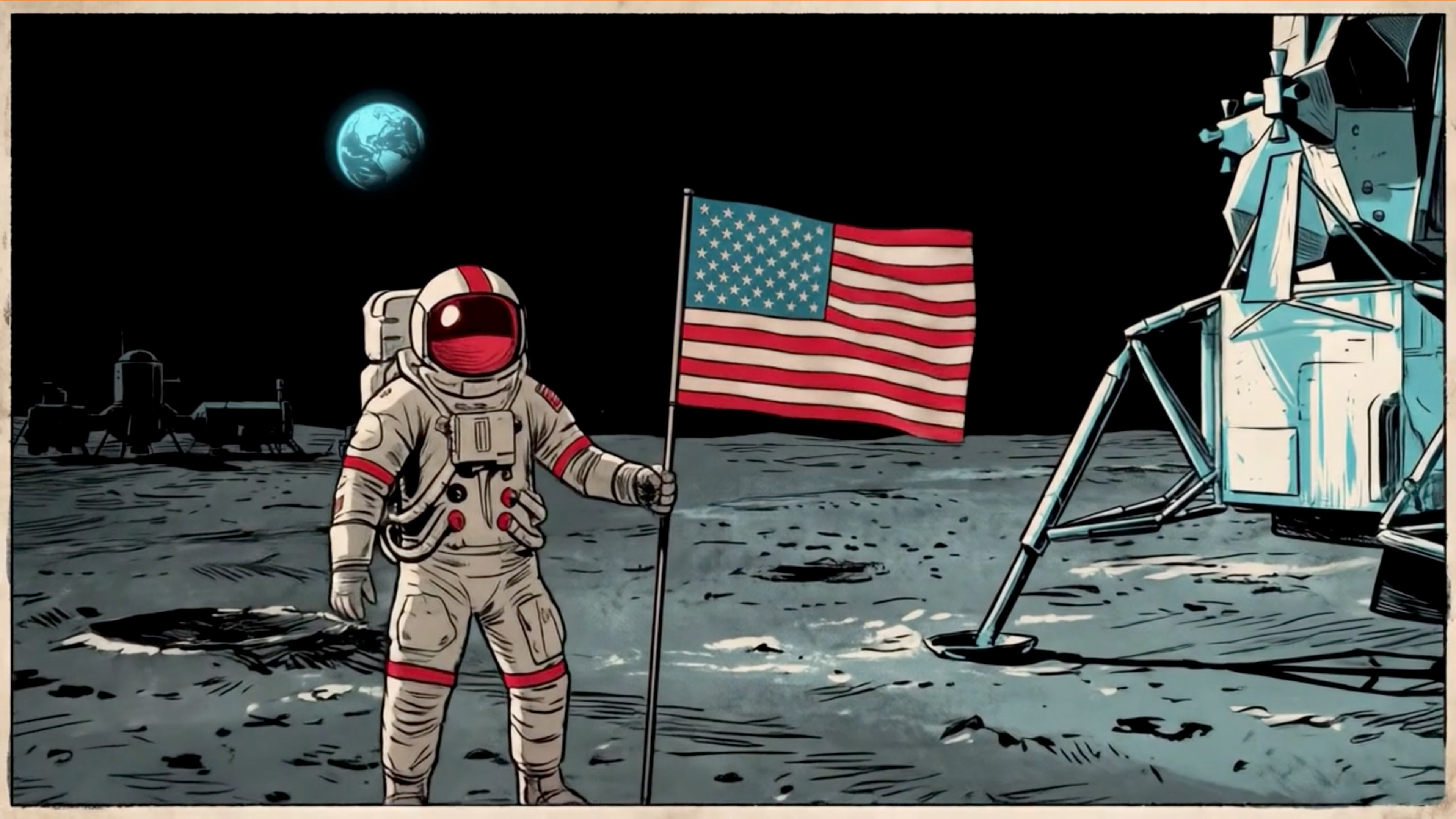
The concept presents Artemis as a story unfolding through a series of cinematic scenes. I developed a graphic-novel-inspired visual language combining cinematic space imagery, illustrated characters, strong silhouettes, controlled colour and graphic compositions.
The intention was to create something stylised, dramatic and slightly playful rather than simply reproduce the source material.
The imagery was developed through a Magnific Workflow-led process, using AI generation and enhancement to explore compositions, characters, environments and details before developing the scenes into motion.
From Article to Motion
The project developed as a complete creative pipeline rather than a collection of isolated AI images.
01 — Source & Concept
NASA article → narrative concept and visual direction.
NASA article → narrative concept and visual direction.
02 — Script Development
Key information → short-form voice-over script and story structure.
Key information → short-form voice-over script and story structure.
03 — Art Direction
Tone, colour, composition, character treatment and overall visual style.
Tone, colour, composition, character treatment and overall visual style.
04 — Scene Development
Characters, environments and compositions developed using Magnific Workflow and other AI tools.
Characters, environments and compositions developed using Magnific Workflow and other AI tools.
05 — Motion
Still imagery developed into moving sequences using image-to-video and motion techniques.
Still imagery developed into moving sequences using image-to-video and motion techniques.
06 — Voice Over
Voice development, timing and delivery to support the narrative.
Voice development, timing and delivery to support the narrative.
07 — SFX & Music
Sound and music developed to create atmosphere, rhythm and scale.
Sound and music developed to create atmosphere, rhythm and scale.
08 — Edit & Finish
Picture, motion, voice and sound brought together and refined in Premiere Pro.
Picture, motion, voice and sound brought together and refined in Premiere Pro.
The outcome
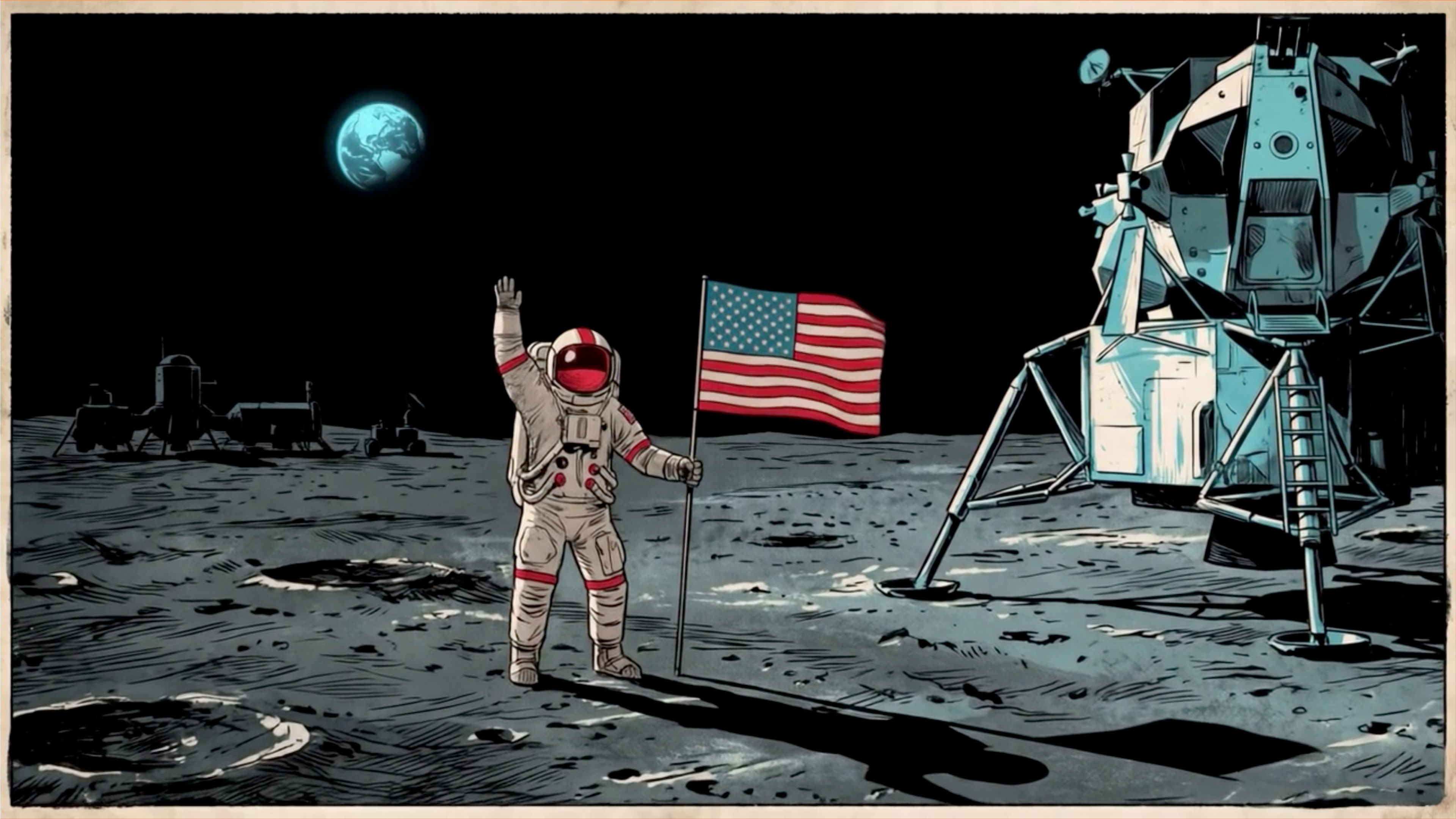
The result is a short audiovisual interpretation of NASA’s Artemis update, demonstrating how source material can be developed into a complete visual story through an AI-assisted creative workflow.
More than a demonstration of individual tools, the project explores the role of the creative practitioner in directing the story, visual language, motion and sound to create a finished piece.
My approach
I treated the project as a complete creative exercise, taking responsibility from the initial concept through to final output — covering storytelling, script development, art direction, visual development, AI-assisted production, motion, sound and editing.
The AI tools became part of the creative workflow rather than an end in themselves, with selection, prompting, refinement, composition, continuity and editing shaping the final result.
Related Projects
Deloitte — Building the Lucky Country #6
Deloitte — Western Australia: A New Way